

Uncovering your largest Hidden Cost

Kenny@Maru
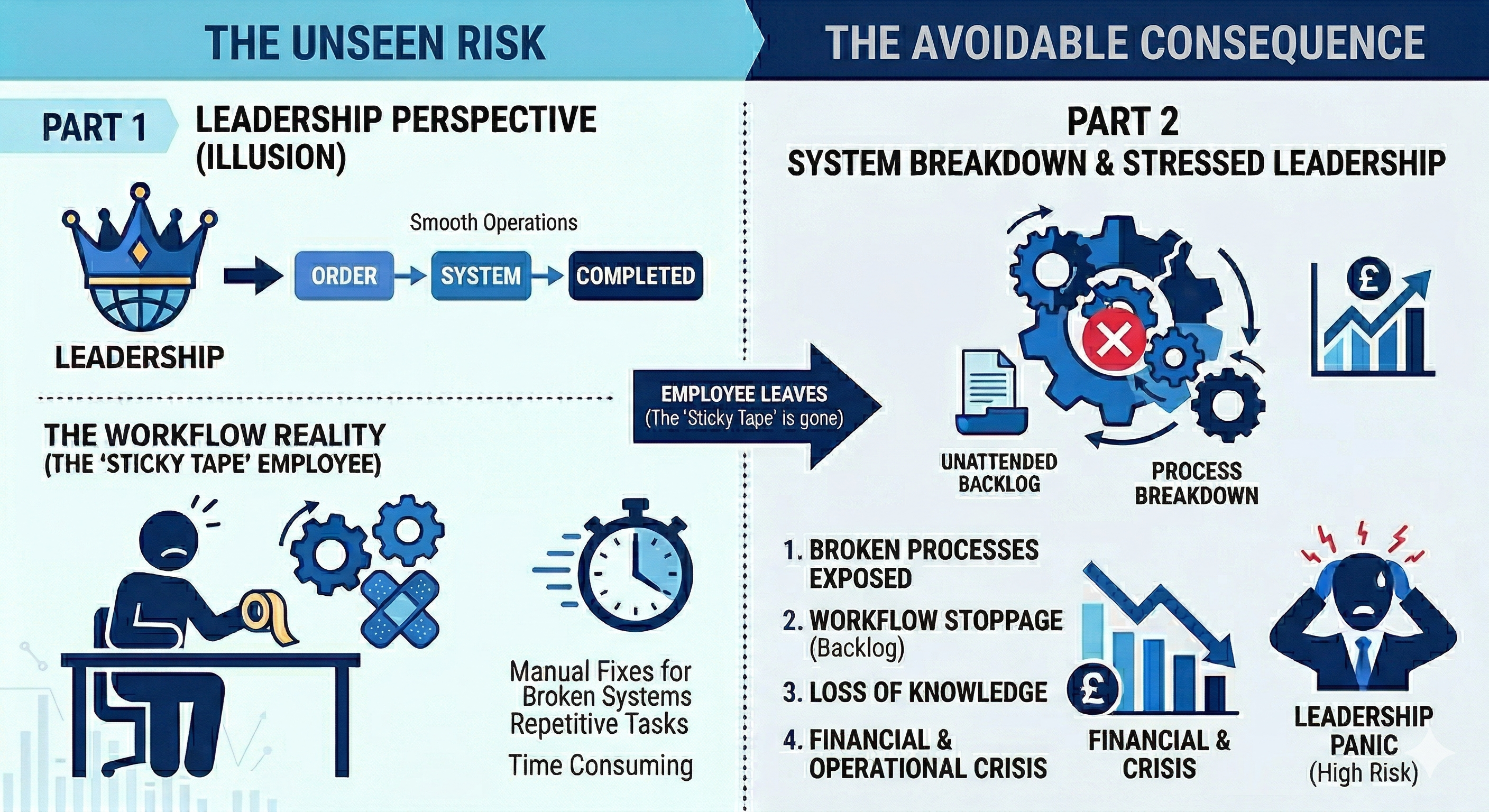
If a process is fundamentally broken, but an employee is spending four hours a day manually fixing it, the leader only sees the final, polished result. They assume the system works.
In reality, the business is paying a premium salary to cover up an inefficiency rather than solving the underlying problem. It is the definition of a false economy. You are paying a capable, intelligent professional to be a human plaster, doing repetitive tasks that a streamlined process or automated system could handle in seconds.
Recognising the Symptoms
To find the bloat, you have to talk to the people doing the heavy lifting. You are looking for the employee whose daily internal monologue sounds exactly like this:
"This is such a pain. It takes ages and eats all my time. It doesn't get done when I'm off, so I always need to play catch-up when I'm back. Honestly, it all really gets on top of me."
If you uncover this sentiment in your organisation, red flags should be flying. This isn't just a minor complaint; it is a symptom of a deeply flawed operational structure.
When a business relies on a person rather than a process to keep things moving, the collateral damage is severe
Financial Waste: You are paying a human wage for robotic work. That employee has much more to offer—creativity, strategy, and problem-solving—but their potential is being squandered on repetitive admin and busywork.
A Single Point of Failure: Because the broken process is masked by this individual, the workflow is entirely reliant on them. If they take annual leave, go off sick, or leave the company entirely, the work simply stops.
Demoralisation and Burnout: Nobody wants to feel like their only value is doing soul-crushing, repetitive tasks. It makes employees feel put upon and underappreciated.
Cultural Toxicity: When one person feels constantly overwhelmed and burdened by inefficient tasks, that frustration inevitably spills over. It impacts the atmosphere in the office, lowering team morale.
The Threat of Burnout
The biggest risk of ignoring operational bloat is the eventual breaking point.
The "sticky tape" employee is highly likely to reach a stage where they have simply had enough. When they finally walk out the door, they take the entire unwritten, manual process with them. The business is left with a catastrophic disconnect: a vacant role, a completely broken workflow, and zero institutional knowledge on how to fix it.
Stop Masking, Start Solving
You cannot fix what you do not know is broken. Identifying operational bloat requires bypassing the high-level reports and having candid conversations with the people on the ground. Find your "sticky tape" employees. Ask them what tasks drain their time, what processes break when they take a day off, and what drives them up the wall on a daily basis.
When you stop paying people to cover up inefficiencies and start investing in solving the root causes, you don't just save money. You empower your team to finally do the work they were actually hired to do.